
Maintenance, what’s the story?
There’s a moment when a newly installed landscape looks almost effortless.
The plants are small and tidy. The rock is clean. Everything is in its place. And it can be easy to look at that landscape and think: this is low maintenance.
But a landscape doesn’t stay at day one.
Plants grow. Organic matter collects. Weeds find their way in. Spaces fill out. Materials weather. And regardless of whether the ground is covered in rock, composted mulch, or plants, the landscape will need care.
There really is no such thing as a no-maintenance landscape.
That’s why I think it’s more useful to design for year five, rather than just installation day.
At installation
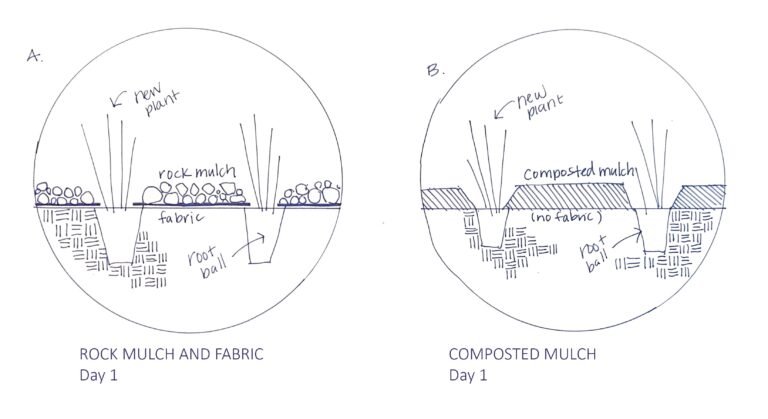
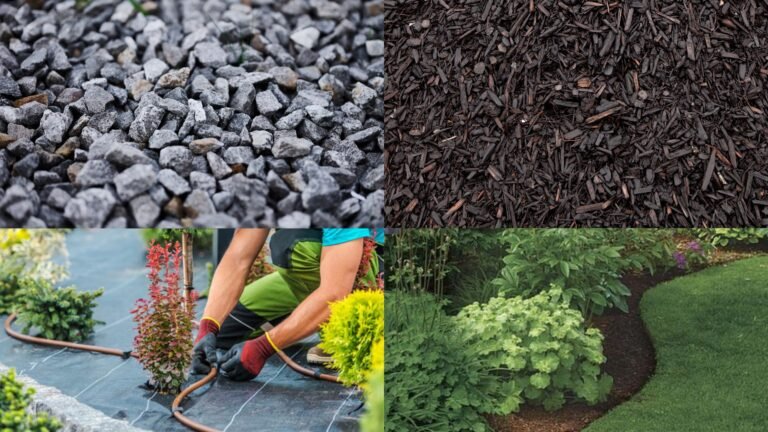
This is often where rock has an immediate appeal. It looks clean, finished and permanent — and holds this state for a year or more!
Composted mulch and young planting can feel a little less complete. Plants are small, there’s visible space between them, and you have to imagine what those plants will eventually become.
Year Three
By year three, the landscape is beginning to settle in, and the maintenance needs of each approach become a little clearer.
Rock mulch
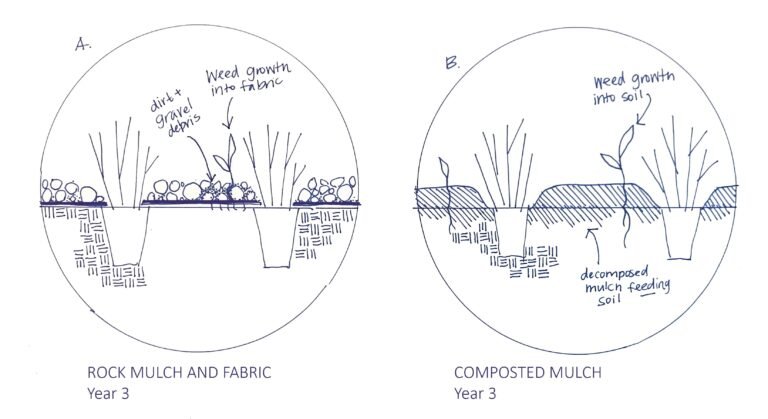
Organic debris and fine material naturally begin to collect between the rock. Over time, this creates new opportunities for weeds to establish above the landscape fabric, and regular weed management becomes part of the ongoing maintenance.
Composted mulch
As composted mulch breaks down, it adds organic matter back into the soil, helping support moisture retention, soil structure, and plant health. The mulch layer will also need to be topped up periodically to maintain coverage and help manage weeds.
Year Five
Rock mulch
By year five, organic debris and fine material have continued to build up between the rock, creating a growing medium above the landscape fabric. Weeds can establish within this layer, with roots becoming intertwined with the rock and fabric, making removal more difficult. Keeping the rock looking clean requires ongoing weed and debris management.
Composted mulch
By year five, the original mulch has continued to break down and become part of the soil. Periodic top-ups help maintain a protective mulch layer and ongoing weed suppression. As plants mature and begin to cover more of the ground, the landscape itself plays a larger role in shading the soil.Both landscapes still need care. The difference is how that care evolves over time. 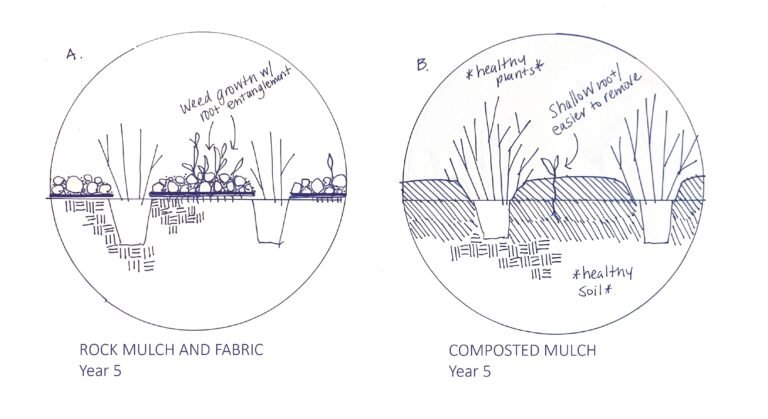
What’s happening below the surface?
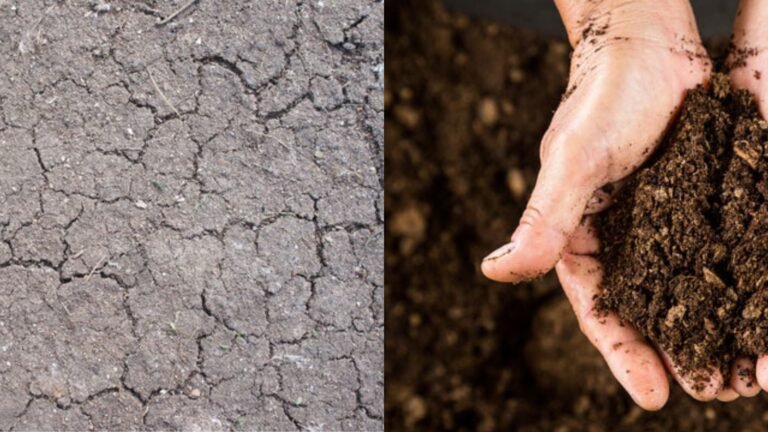
The difference isn’t only what we see above ground. It’s also what’s happening in the soil.
Rock mulch
Rock remains relatively unchanged over time. It protects the soil surface, but doesn’t contribute organic matter as it ages.
Composted mulch
Composted mulch gradually breaks down and becomes part of the soil, adding organic matter and supporting moisture retention, soil structure, and plant health over time.
Long term: The question isn’t “How do we create a landscape with no maintenance?” It’s “What kind of maintenance makes sense for this landscape over time?”